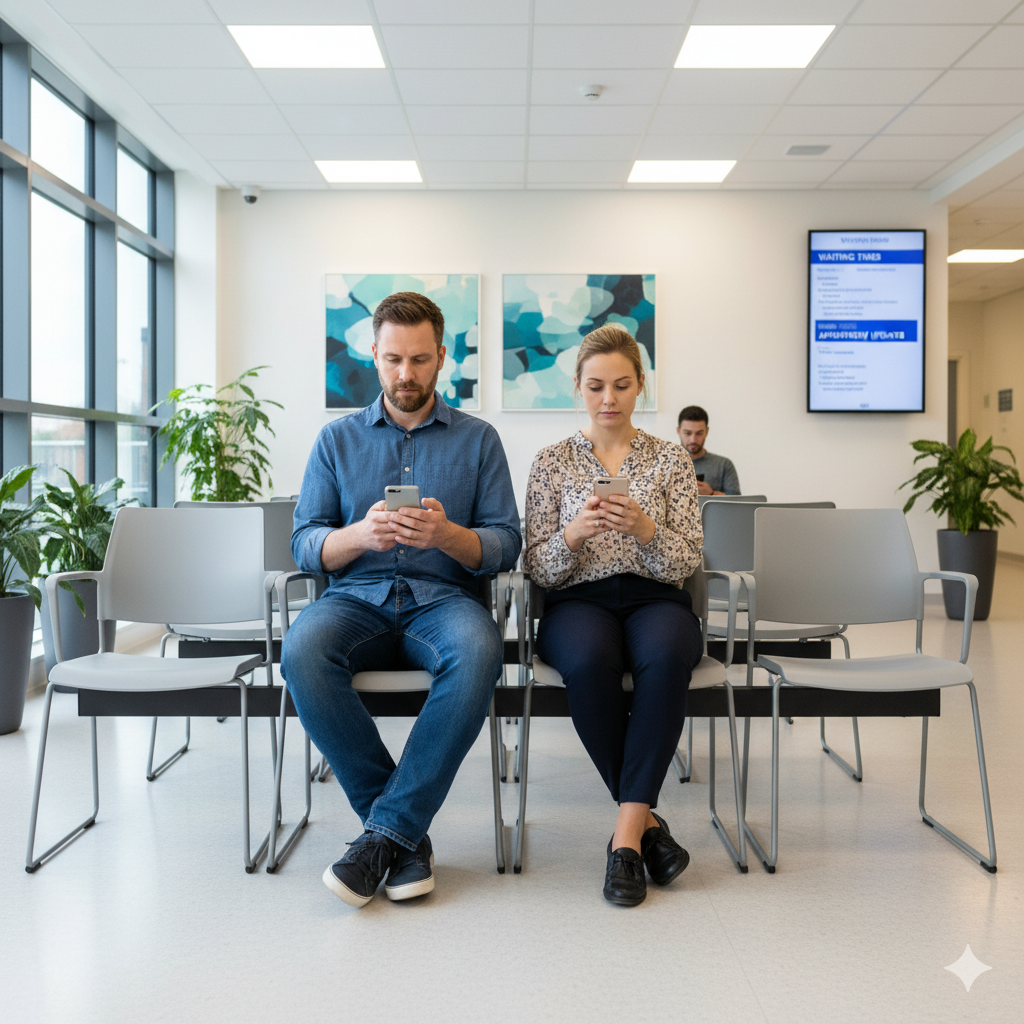
On May 21, the first appointment of a series of meetings promoted by XIII SIMEU TriVeneto Congress we presented the digitization experience of Emergency Department of the Autonomous Province of Bolzano occurred through the adoption of our product NEO Emergency.
Currently being released in the seven provincial emergency rooms, the app will be branded with the name SanitRack and will introduce an innovative model of communication between patients, caregivers and healthcare personnel.


It informs patients and caregivers in a clear, constant and personalized way.
Turn idle time into an opportunity for orientation and awareness.
It reduces the sense of abandonment, promotes trust and involvement.
It lightens the information load on staff and optimizes flows.
It improves the traceability of information and reduces the risk of misunderstanding.
It enhances the presence of the family network, without burdening clinical work.

NEO Emergency is designed to improve the experience of those who enter the Emergency Room — and those who work there — right from the start.
For patients, the possibility of receiving clear and continuous information along the way reduces uncertainty and promotes greater awareness.
Through the app, each person can keep track of their journey thanks to a real “digital diary”, in which to write down questions, take notes, save useful reminders for comparison with healthcare personnel.
In a context often perceived as chaotic and impersonal, this new mode of communication restores an active role to the patient.
Even the patient's social circle — family, friends, caregivers — is finally involved.
With the consent of the assisted person, it is possible to receive real-time updates on the evolution of the path, reducing the anxiety of waiting and strengthening emotional support. The patient decides who can access the information, selectively and with respect for privacy.
For healthcare personnel, the immediate availability of data collected during the triage phase or directly through the app makes it possible to alleviate repetitive information activities with low added value.
Professionals can thus dedicate more time to clinical and relational activities, meeting more prepared and less disoriented patients. Even for the hospital facility, the impact is significant: the digitization of information flows allows greater traceability, reduces the risk of communication errors and improves the perceived quality of the service. The overall effect is a more fluid, humane and efficient treatment path.